- The Leader Mindset
- Posts
- The Leader Mindset #48
The Leader Mindset #48
The Difficult Transition From “One of Us” to “In Charge”: How to Lead Former Peers

Andy Noon, PhD
February 15, 2026

Hi everyone,
As part of my business focus, I built a Succession Management Maturity Model Assessment (SM³A) to help organizations pressure-test a question most avoid: how strong is your succession planning, really?
This short, free assessment cuts through good intentions and exposes whether your approach is truly mature, or quietly increasing risk.
Take the assessment yourself or forward it to your HR or talent team to get a more honest read on your leadership pipeline. In return, I will send you a comprehensive report specific to your organization.

Click logo to complete
Interested in learning more about the assessment, click the logo below.

The Difficult Transition From “One of Us” to “In Charge”: How to Lead Former Peers
A few years ago, I worked with a leader who was promoted from Manager to IT Director. He had spent years on the management team, building strong relationships with his peers. Together, they built systems, handled late-night outages, debated priorities, and still went to lunch together almost every day.
When their boss retired, he was the clear choice to take over. He was capable, experienced, and respected throughout the organization.
But just a few weeks into the new role, things started to change.
As he started sharing his vision for IT, suggesting changes to governance and a more focused long-term plan. He expected the team to debate and challenge his ideas, as they always had before.
Instead, he witnessed something he did not expect.
Deadlines started slipping. People were less firm in their commitments. Conversations that used to be open now felt guarded. Even when the team agreed in meetings, they didn’t always follow through. There was no open conflict, and the team’s energy was different.
He didn’t know what to do. He didn’t want to hurt the relationships he cared about or make his colleagues think the promotion had changed him. But he also knew that waiting too long would slow down the progress he wanted for the organization.
Moving from peer to leader is one of the most common and tricky challenges I see. Ironically, it’s the familiarity that makes the change so delicate.
So, how can you lead effectively when transitioning to leading former peers?
It requires some deliberate actions and clear mindset shifts.
First, recognize the change
A common mistake is acting as if nothing has changed. Leaders sometimes hope that staying the same will keep team dynamics intact.
But it won’t.
If you don’t talk openly about the transition, your team will make their own assumptions. Some might think nothing has changed. Others may become more cautious, unsure of what’s okay now. A few might quietly challenge boundaries to see what’s different.
Talking about the change brings clarity. Simply saying that roles and responsibilities are different helps reduce confusion.
Set clear expectations without overreacting
As a peer, you influenced others through persuasion and teamwork. Now, as the leader, you’re responsible for setting direction and delivering results.
You need to define what success means for the team going forward. What standards are essential? What behaviors help move the team forward? What old habits should the team leave behind?
New leaders sometimes lower expectations to protect relationships. They hope that shared history will help communicate standards without having to say something that feels uncomfortable. But when things aren’t clear, people usually stick to old habits.
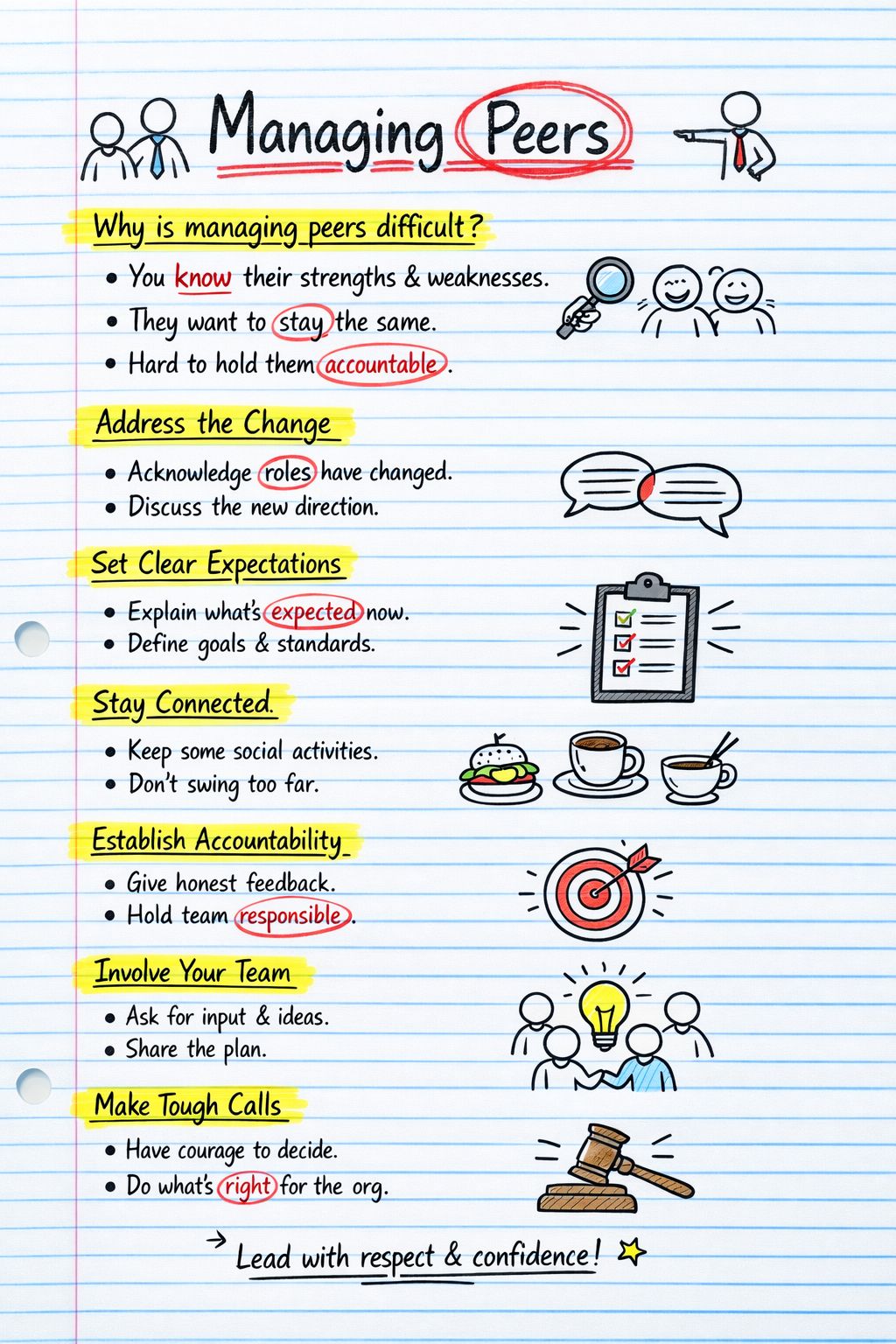
Stay human, but keep boundaries clear
Some leaders deal with the discomfort by pulling back socially. They skip informal gatherings, avoid casual chats, or become more formal to show authority.
But in most cases, this actually makes relationships needlessly uncomfortable.
You don’t have to hide your personality or forget your common history. But now, fairness and consistency are key. Showing favoritism or giving some people special access can quickly hurt your credibility with the broader team.
Establish clear accountability from the start
At some point, your leadership will be tested. It probably won’t be through open conflict, but through small things like missed deadlines, half-hearted commitments, or quiet resistance.
How you handle these moments sets the tone for your leadership.
If you avoid addressing performance issues because you’re worried about relationships, your team will think standards are flexible. But if you respond directly and constructively, they’ll adjust their performance.
One benefit of leading former peers is that you know their strengths and habits. Your feedback can be specific and practical. You can recognize their past contributions while focusing on what’s needed now.
This is an important time to sharpen your skills around feedback, coaching, and delegating.
Get the team involved in shaping the future
Remember, this transition isn’t just about you. Your team has lost a peer and gained a leader, and they need time to adjust too.
When you involve the team in planning strategy, setting priorities, and deciding how to get things done, it builds shared ownership. When people see their strengths and ideas valued, they’re less likely to resist new changes you are making.
For the IT Director, things moved faster once he asked the team to help refine the roadmap rather than present it as final. He still owned the direction, but the team felt included in the process.
Recognize that courage is needed
In the end, leadership means making decisions that not everyone will like. Changing resources, adjusting roles, having tough conversations, or shifting strategy can all make people uncomfortable.
Such times test both your authority and your sense of identity.
When your decisions are based on the organization's needs, and you communicate them openly and respectfully, your credibility grows over time. Effective leadership isn’t about everyone agreeing with you. It is about achieving the best possible results for the good of the team and organization.
Conclusion
Becoming a leader from within the team isn’t just a promotion; it’s a change in identity. You can’t stay just “one of the group” when you’re accountable for what the team needs to accomplish.
The Director I mentioned earlier eventually found his footing. The resistance didn’t disappear right away, but his willingness to fully embrace his new responsibilities did.
As I always tell leaders who are promoted over former peers, appreciate your team's shared history and respect the relationships that helped you get here. Then lead with the fortitude your new role now requires.
I help leaders navigate these challenges with individual transition coaching – I call it Transition Acceleration Coaching (TAC). Let me know if you would like to learn more about it.
How would you rate this week's newsletter?If you have a second, I'd love your feedback, just click below: |

Andy Noon, PhD
Sent the article? Subscribe for free.
Interested in learning more about our solutions? check them out.
Thanks for reading and look forward to seeing you again next week.
Andy
Reply